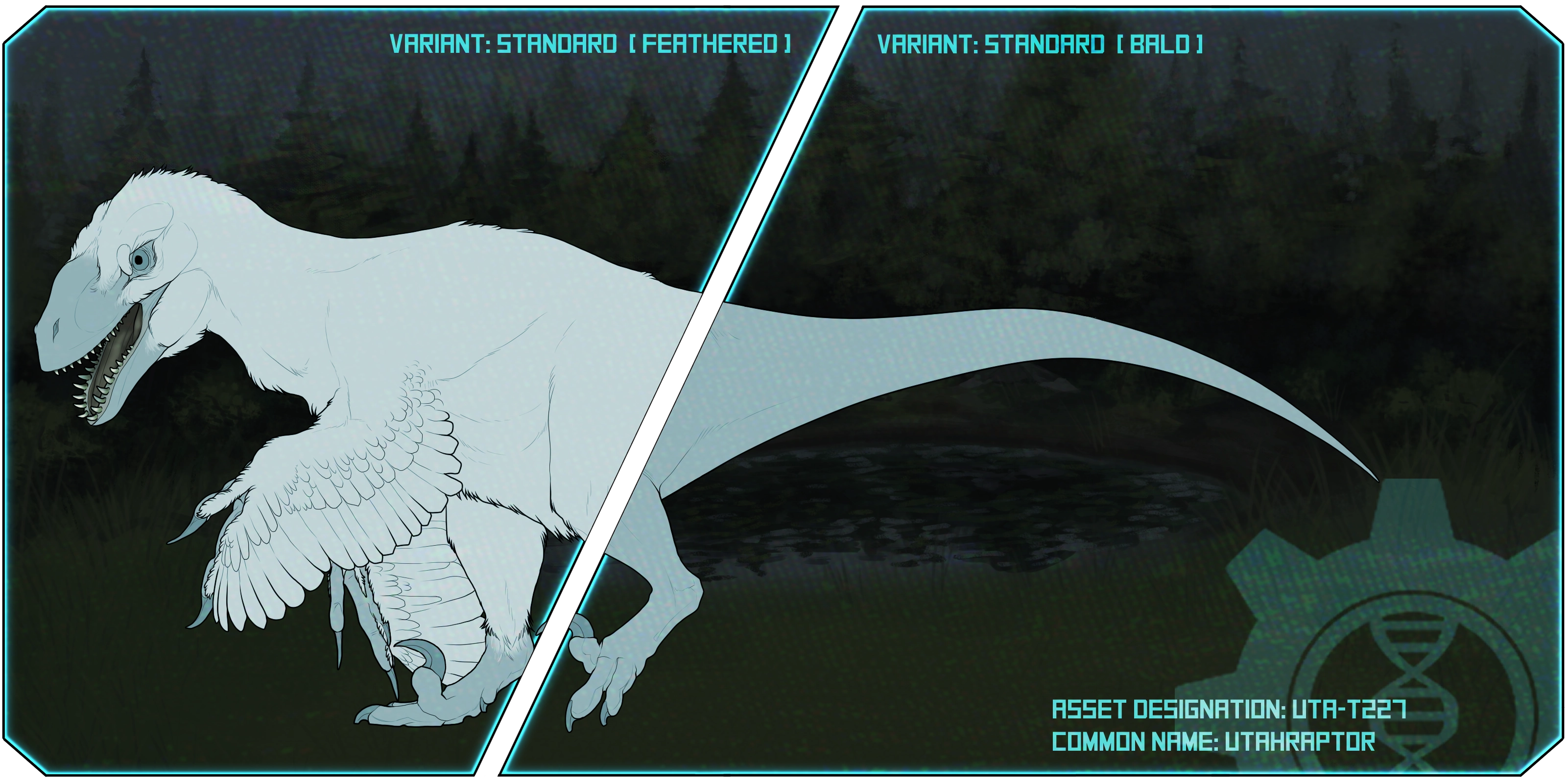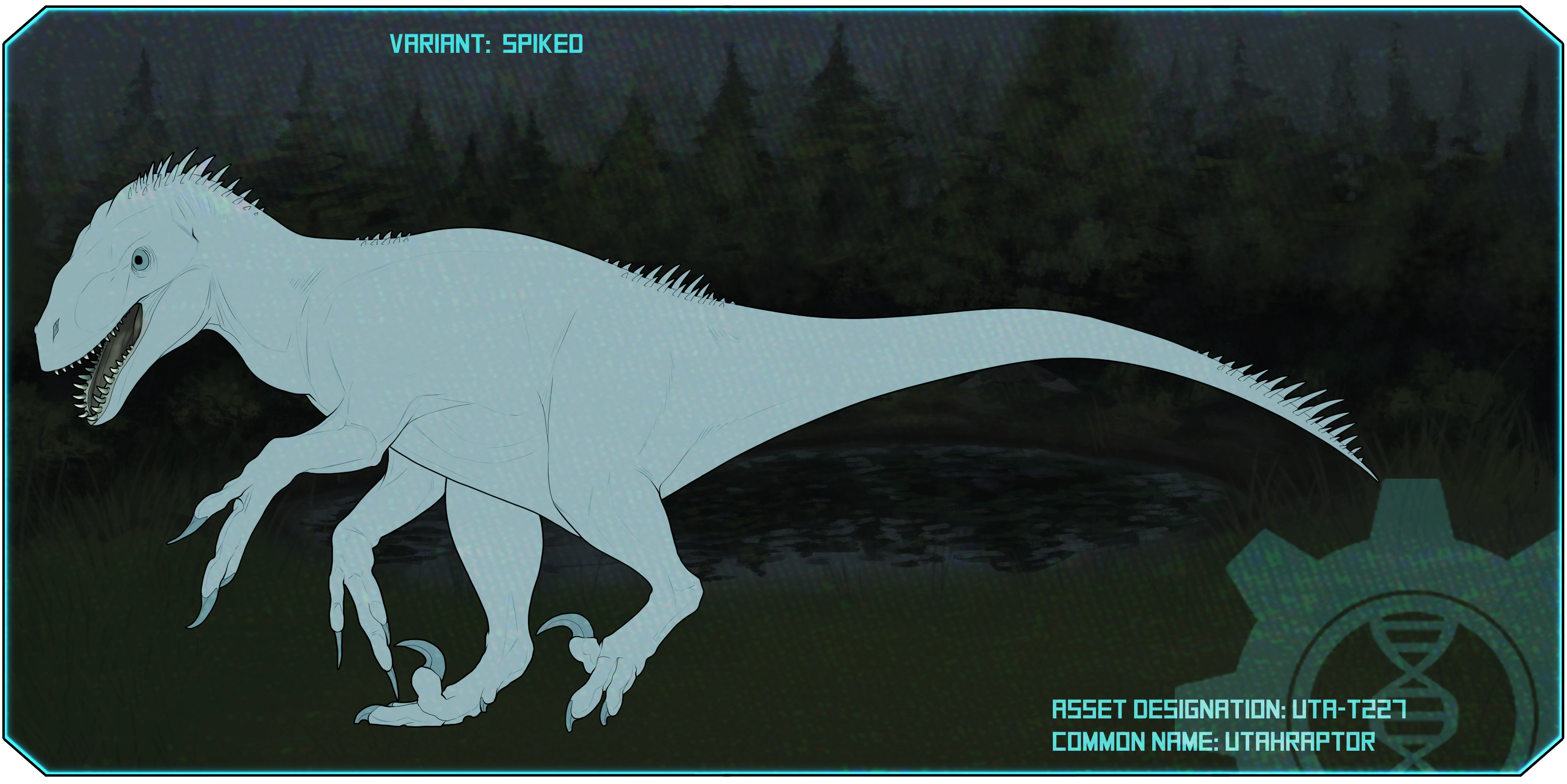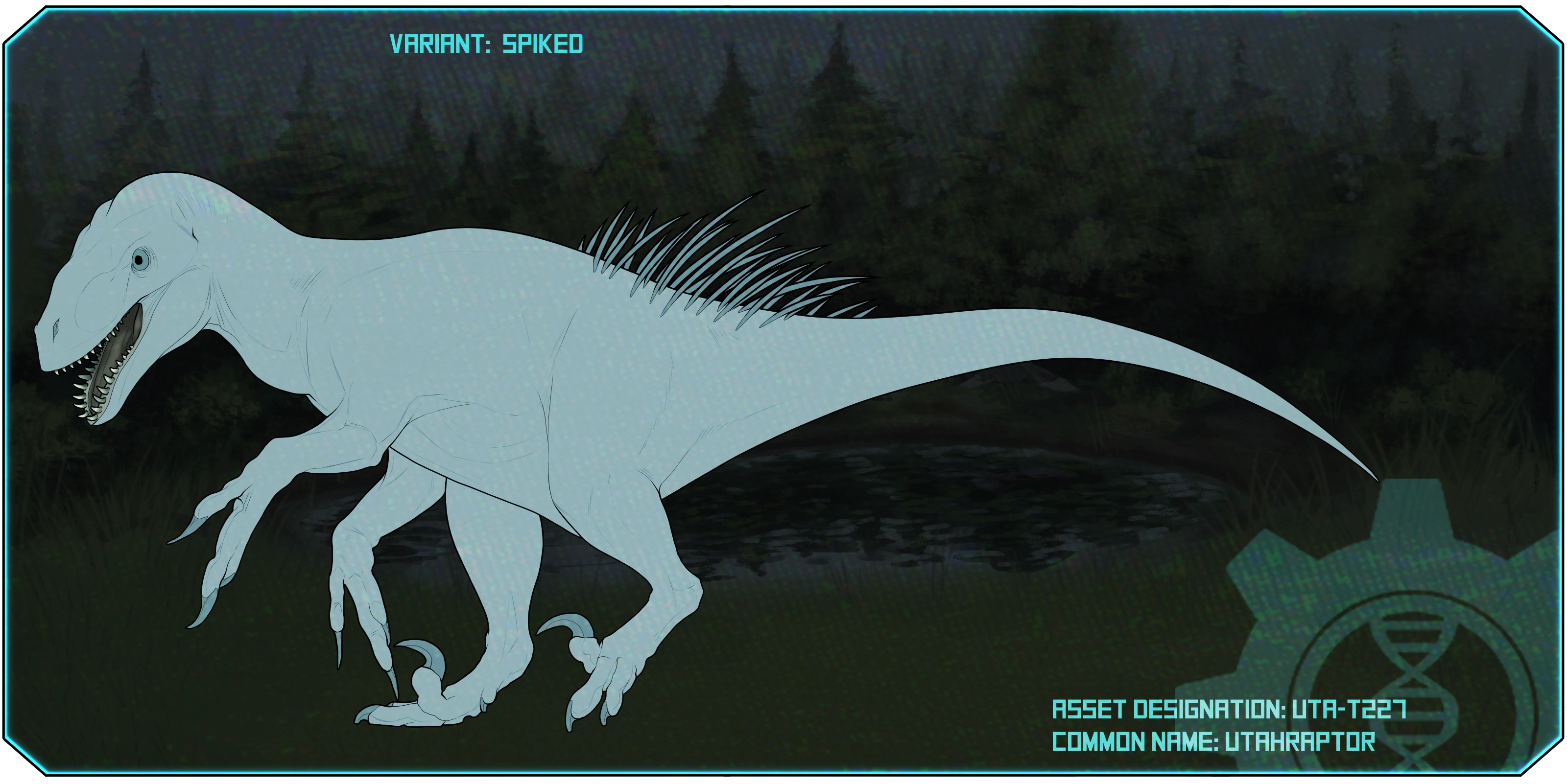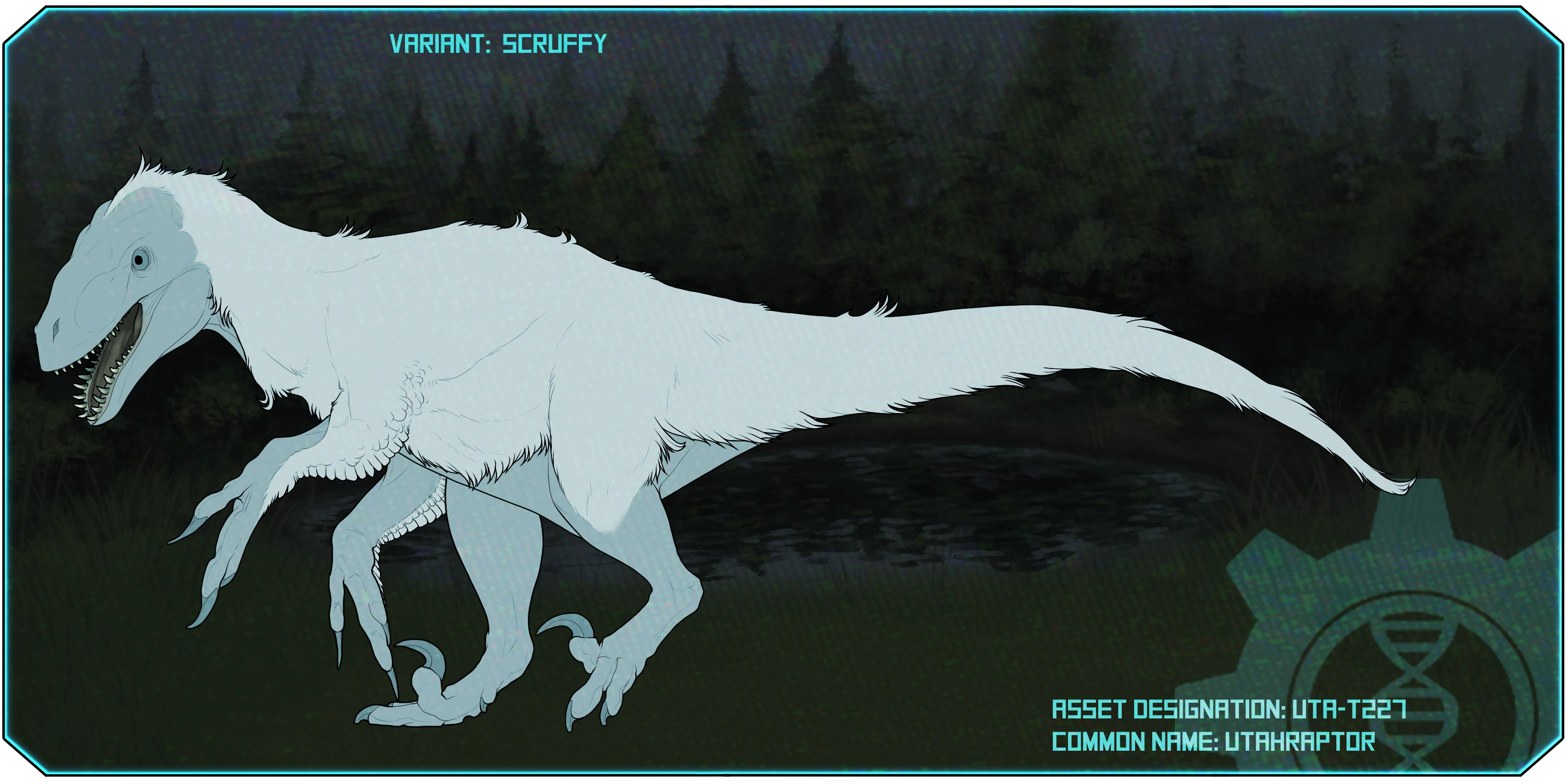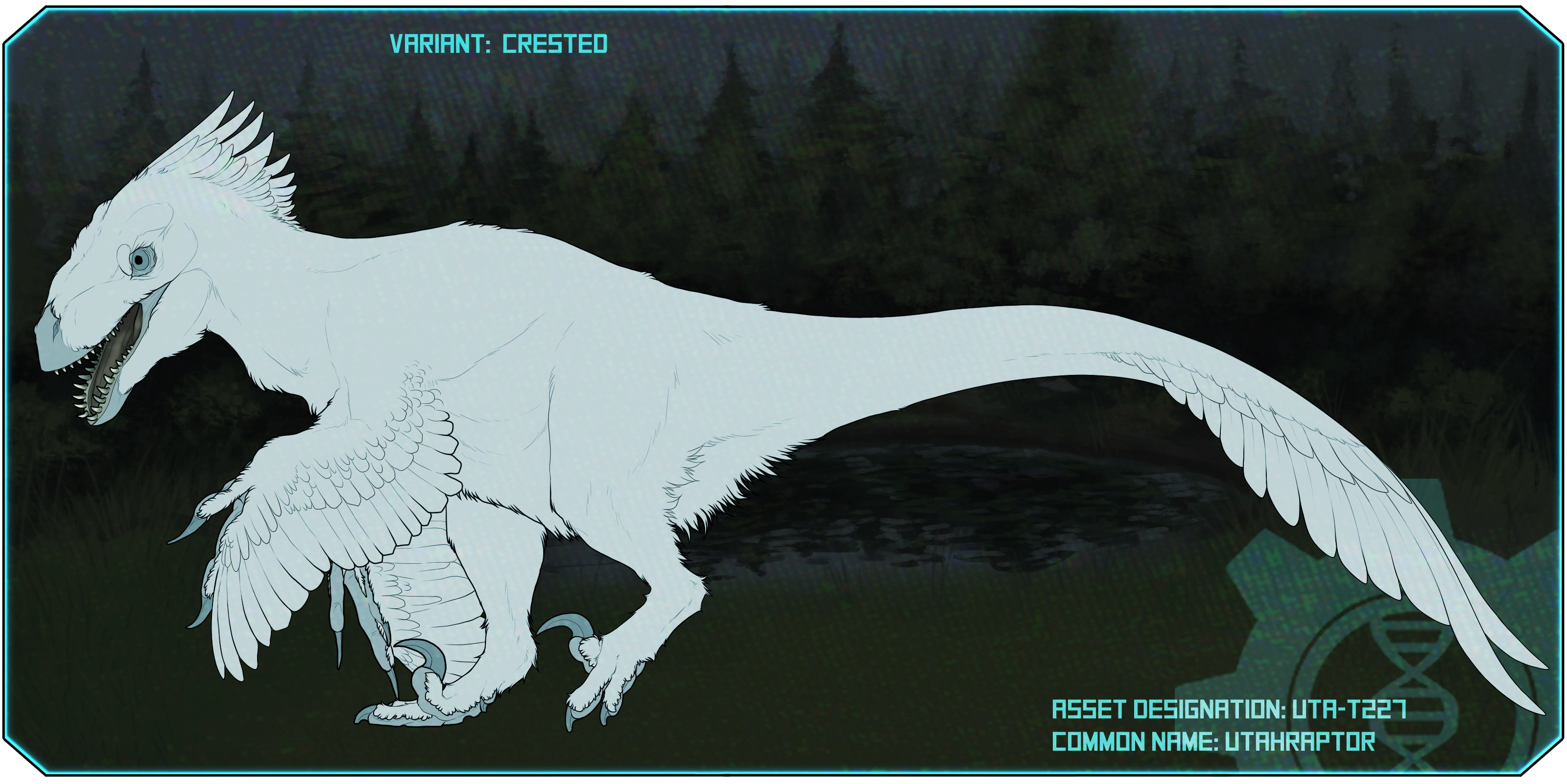
◆ Utahraptor
Asset Designation: UTA-T227
Classification: Utahraptor regulus
Genetic Origin: North America, Early Cretaceous
Diet: Carnivorous
Rarity: Common
Type: Terrestrial
Defense
3Speed
4Strength
3
Biology
Lore
All information presented below is a record of average species behavior. Every individual is different, so this profile may not be an accurate depiction of every utahraptor out there.
OriginsUtahraptors, also known as utahs, were one of the earlier carnivorous species engineered by Morpheus as part of Project Genesis. Morpheus developed utahs with bigger brains to increase their natural intelligence, and also enhanced their musculature to enable utahs to jump greater heights.
Specimens of this species were stored in the Genesis facility and were released when major storms buffeted the Kiama Islands, short-circuiting power systems and releasing utahs from stasis. With their sharp minds and pack hunting strategies, utahraptors quickly secured a spot as one of the most crafty predators in the environment.
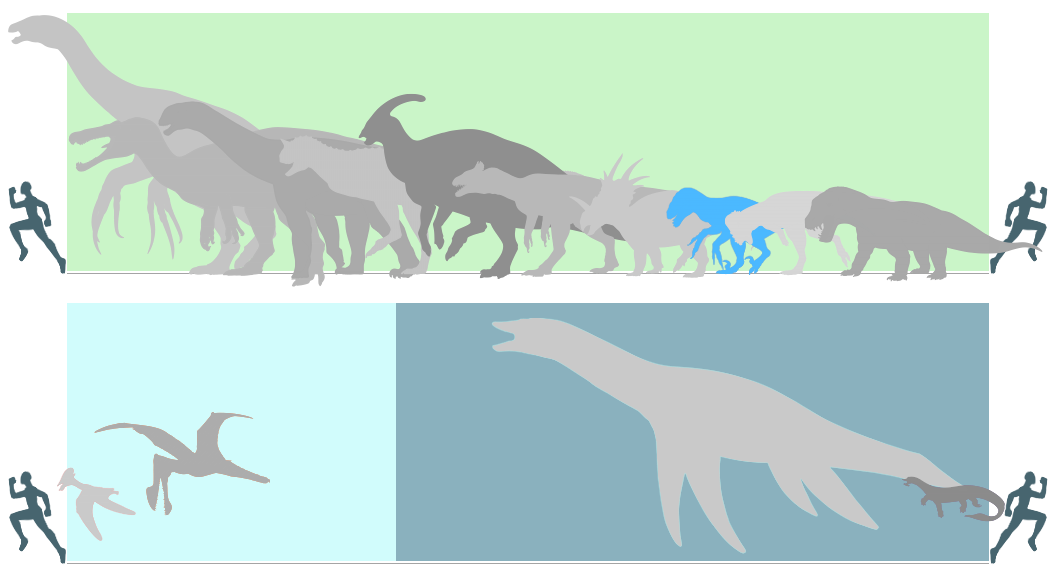
Utahraptors are smaller-sized theropods which adapt their hunting strategies to their situation and environment, able to easily pull from previous knowledge and concoct new ideas on the fly. They seem able to easily adjust to any habitat they find themselves in, and they will change their living style depending upon if they have a pack to rely upon or not. Utahs are quick and agile despite their size, but are still stocky enough to take on larger prey animals.
Females and males are often visually indistinguishable besides the dimorphic markings that many males display, adding flashes of color to their bodies.
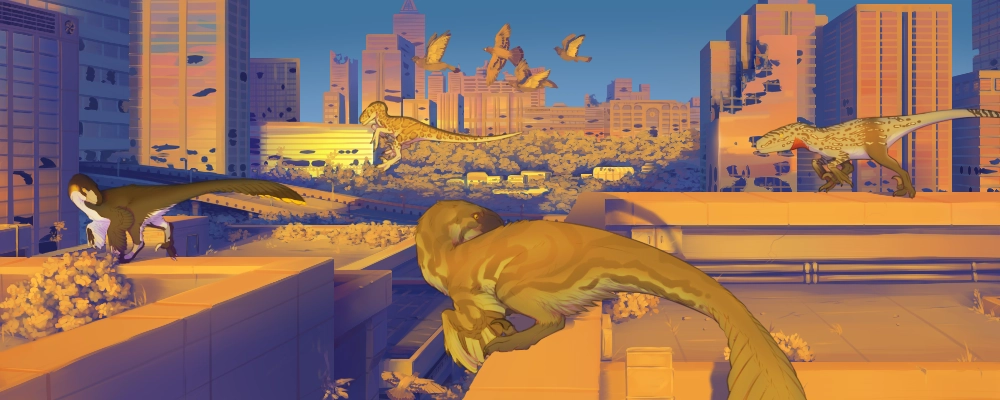
Utahs always use their environment to their advantage. The utahraptor’s enhanced leap is second to none on the islands, enabling them to gain elevation and maneuver around obstacles easily. Rugged terrain is preferred as it allows utahs to corral and corner prey for a takedown. Utahs in a pack are even more deadly, coordinating to hunt big prey animals that they otherwise wouldn’t stand a chance against.
Many utahs hunt by working together to herd prey and wear it down from repeated attacks, but it is not uncommon for utahs to devise traps for their prey, either. Utahs may alter the environment to create traps that they run prey into for an easy catch.
Favored biomes: Temperate, Urban, Arid
Utahraptors are very social, pack-oriented dinosaurs. They generally prefer to be around other utahs or other carnivores, and they enjoy hunting with others as a coordinated unit. Ranking within a pack is often determined by how intelligent or strong a utah is, depending upon what the pack values most. Utahs have a reputation for playful, mischievous nature among themselves, and can often be found getting up to no good.
With their keen minds, utahs often engage in mentally stimulating activities to entertain themselves. Such activities include crafting things and studying human language, of which utahs are considered to be the most adept scholars for. If one catches them in a good mood, a utah may be willing to divulge some of the secrets that they’ve learned from studying human things (or they’ll pretend to know secrets and then tell you lies, for fun). Many utahs also have an affinity for collecting things that catch their eye, which could include rocks, bones, or shiny things they take an interest in.
Utahs are are an inconsistent species when it comes to relationships. Some are monogamous and prefer to stick with one partner, while others will take multiple different partners throughout their lives- sometimes courting multiple at the same time. Courtship varies, but is often elaborate for this species, involving courtship dances, displays, and presenting treasurers to garner favor.
Nests for utahs often vary greatly and depend upon the environment they are being built in. Utahs aim to select areas that are well-sheltered and concealed from spying eyes, such as up inside buildings or within shallow dens. Many parents will take extra steps to add material that further shelters the nest, such as branches or fabric.
Pachycephalosaurus - Pachy is the hard-headed counterpart to the utahraptor, outweighing the raptors and with a nasty disposition to boot. Utahs often harbor a fear of the aggressive omnivores, which also partake in pack hunting tactics and can maneuver their way up an obstacle almost as easily as any utah. An angry, determined pachy is often a utah’s worst nightmare.
Dacentrurus - These large herbivores are known for their hostile nature towards carnivores, but they often are surprisingly tolerant of utahraptors. This may be because of the utah’s tendency to harass and compete with the dacen’s greatest enemy: the albertosaurus. Dacen will allow utahs to hang around the same areas as them, and the combination of the two species often helps deter other large, more dangerous predators from the area.